Nourishing Qi & Yang
Strengthening Vitality • Supporting Warmth • Restoring Energy
What Are Qi & Yang Deficiency?
In Traditional Chinese Medicine (TCM), Qi represents the body's vital functional energy, while Yang represents its warming, activating, and transforming qualities.
Qi Deficiency describes insufficient functional energy. Yang Deficiency includes Qi weakness accompanied by insufficient warmth.
Common signs of Qi Deficiency: Fatigue, low energy, weak voice, shortness of breath with exertion, poor appetite, loose stools, spontaneous sweating, and a pale tongue.
Common signs of Yang Deficiency: Feeling cold easily, cold hands and feet, fatigue, preference for warmth, loose stools, frequent clear urination, lower back weakness, and a pale, swollen tongue.
🌿 Foods That Nourish Qi & Yang
Traditional Chinese dietary therapy emphasizes nourishing, strengthening, and gently warming foods. Foods that support Qi are appropriate for many deficiency patterns, while more strongly warming foods are generally reserved for Yang Deficiency accompanied by Cold.
Root Vegetables & Tubers
Sweet potatoes — Traditionally support Spleen Qi
Chinese yam (Shan Yao) — Nourishes Spleen and Kidney systems
Carrots
Parsnips
Pumpkin
Butternut squash
Acorn squash
Kabocha squash
Potatoes
Taro root
Turnips
Rutabaga
Beets
Lotus root
Jerusalem artichokes
Grains & Nourishing Starches
White rice
Brown rice, well cooked
Oats
Millet
Quinoa
Buckwheat
Amaranth
Glutinous rice
Wheat
Corn
Polenta
Rice congee
Warm oatmeal
Rice noodles
Beans, Legumes & Soy Foods
Black beans — Traditionally associated with Kidney nourishment
Black soybeans
Adzuki beans
Kidney beans
Chickpeas
Lentils
White beans
Split peas
Soybeans
Tempeh
Tofu, preferably cooked
Peas
Vegetables
Pumpkin
Winter squash
Carrots
Sweet potatoes
Green beans
Peas
Leeks
Onions
Garlic
Scallions
Fennel
Mushrooms
Shiitake mushrooms
Cabbage, cooked
Bok choy, cooked
Kale, cooked
Spinach, cooked
Broccoli, cooked
Cauliflower, cooked
Zucchini
Asparagus
Fruits
Cooked fruits may be preferable when digestion is weak or Cold symptoms are present.
Red dates (Jujube / Da Zao) — Traditionally support Qi and Blood
Longan fruit — Traditionally nourishes Blood and supports the Heart
Cherries — Traditionally warming
Peaches
Apricots
Figs
Grapes
Raisins
Dates
Apples, especially baked or stewed
Pears, cooked
Plums
Blackberries
Blueberries
Goji berries
Chestnuts (botanically nuts, traditionally warming and strengthening)
Animal Proteins & Seafood
Chicken — Traditionally strengthens Qi
Turkey
Beef — Nourishes Qi and Blood
Lamb — Strongly warming; traditionally supports Yang
Venison — Traditionally warming
Goat meat — Traditionally warming
Eggs
Duck eggs
Pork, in moderate amounts
Salmon
Trout
Sardines
Shrimp — Traditionally warming and associated with Kidney Yang
Mussels
Oysters
Slow-cooked chicken soup
Beef and root vegetable stew
Nuts & Seeds
Walnuts — Traditionally support Kidney Yang
Chestnuts — Support Spleen and Kidney nourishment
Pine nuts
Almonds
Cashews
Pistachios
Pumpkin seeds
Sunflower seeds
Sesame seeds
Black sesame seeds
Hemp seeds
Flaxseeds
Warming Herbs, Spices & Aromatics
Especially appropriate for Yang Deficiency with Cold; use milder amounts for Qi Deficiency without Cold.
Fresh ginger
Dried ginger — More strongly warming
Cinnamon
Cardamom
Fennel seed
Star anise
Cloves
Nutmeg
Black pepper
White pepper
Cumin
Coriander
Turmeric
Garlic
Scallions
Leeks
Rosemary
Thyme
Basil
Bay leaf
Traditional Qi- & Yang-Nourishing Preparations
Chicken and ginger soup
Beef and root vegetable stew
Lamb and vegetable stew (for Cold patterns)
Rice congee with Chinese yam
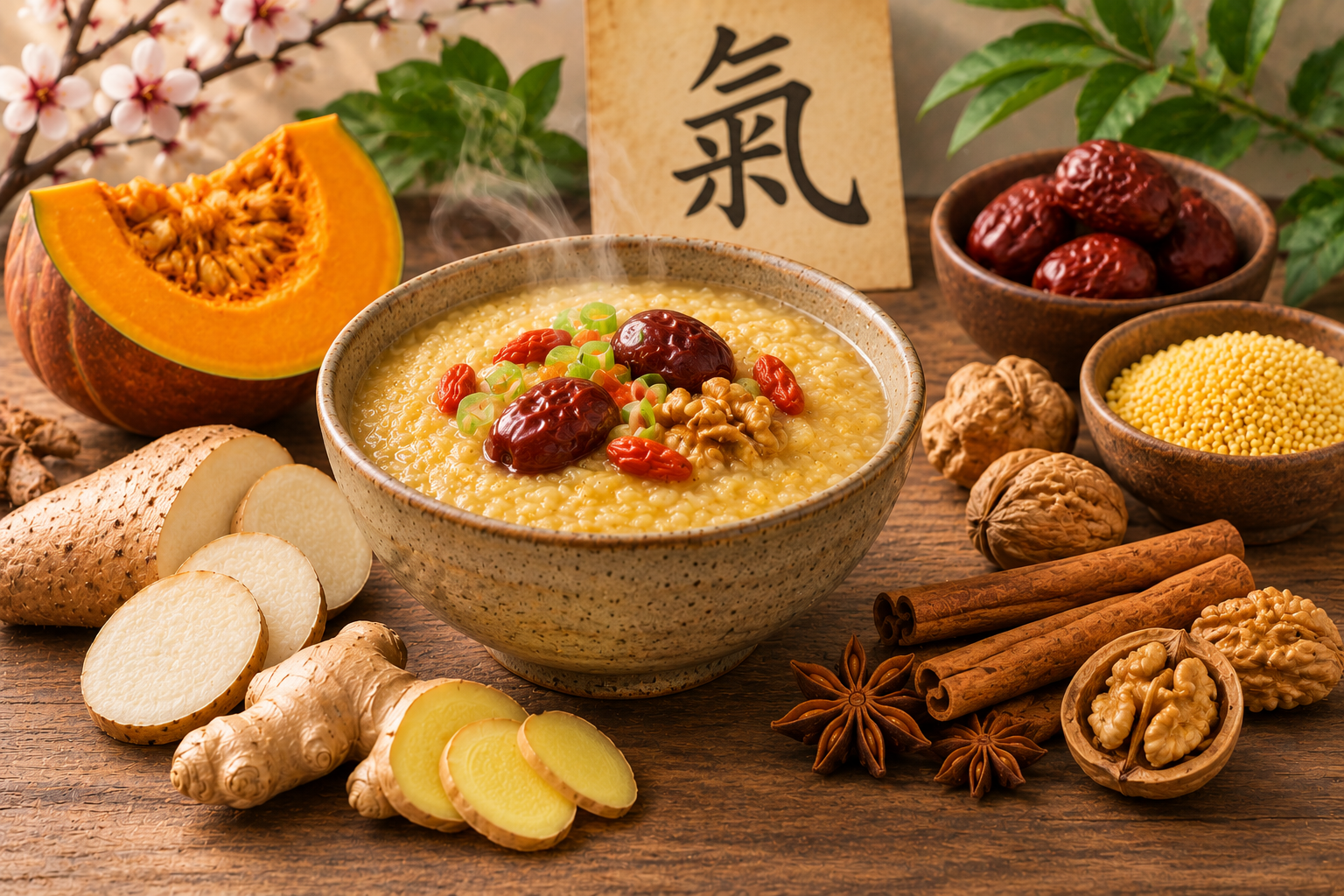
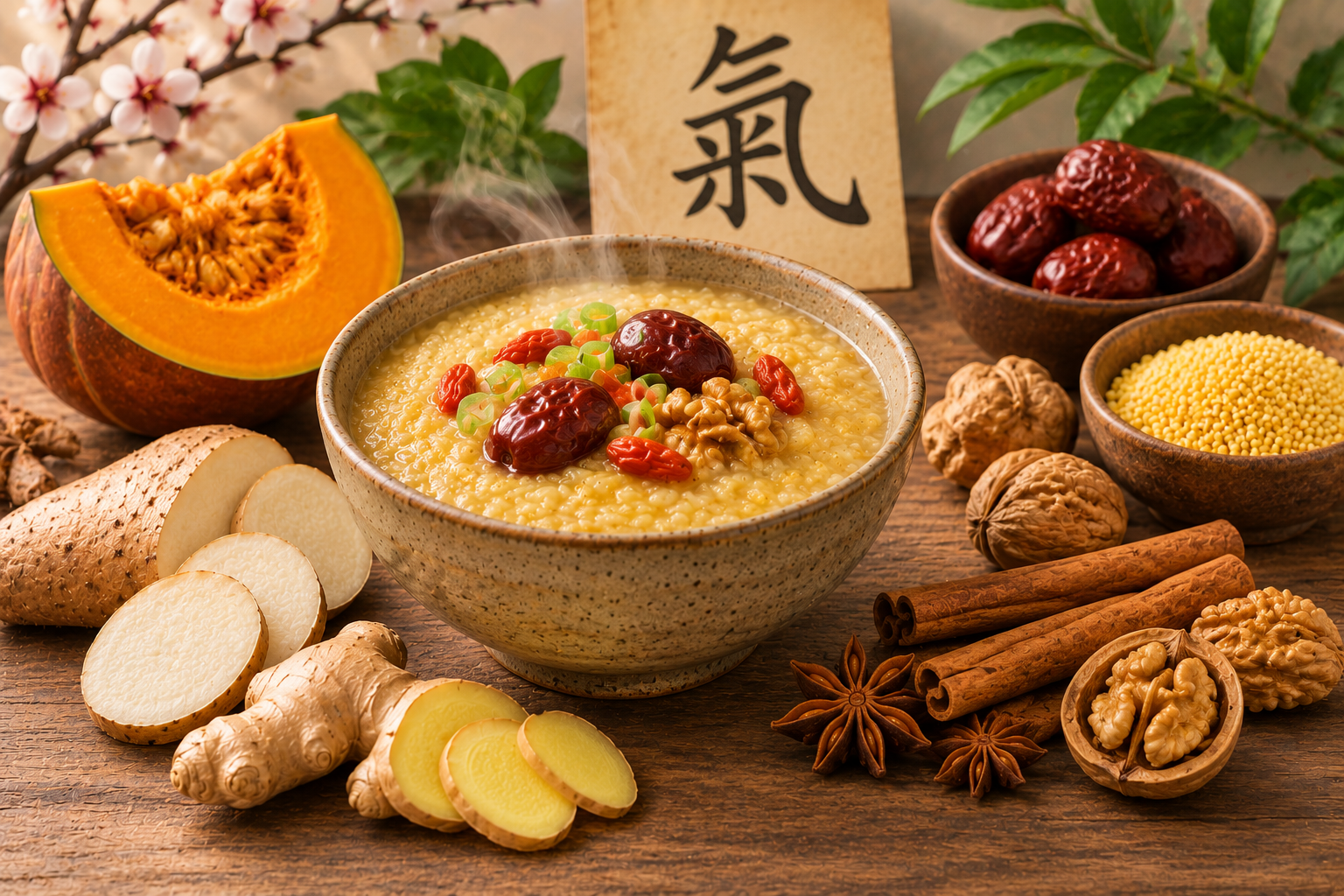
Millet porridge with pumpkin
Chicken soup with red dates
Warm oatmeal with cinnamon and walnuts
Roasted sweet potatoes
Black bean and vegetable soup
Slow-cooked chicken with mushrooms
Ginger and scallion broth
Steamed fish with rice and cooked vegetables
Foods & Habits to Limit
Particularly when Yang Deficiency is accompanied by Cold symptoms or weakened digestion.
Excessively Cold & Raw Foods
Frequent iced beverages
Ice cream and frozen desserts
Large amounts of raw salads
Excessive raw vegetables
Frozen smoothies
Large portions of watermelon
Excessive cucumber
Large amounts of chilled tropical fruits
Cold foods eaten directly from the refrigerator
Foods Traditionally Considered Strongly Cooling
These may be less suitable in large amounts for Yang Deficiency with Cold, but are not universally inappropriate.
Bitter melon
Winter melon
Mung beans
Seaweed in large amounts
Raw sprouts
Large amounts of cooling herbal teas
Excessive chilled tofu
Foods That May Burden Digestion
Deep-fried foods
Excessively greasy meals
Large amounts of refined sugar
Highly processed foods
Excessive alcohol
Heavy meals that consistently cause bloating
Eating Habits to Avoid
Skipping meals
Excessive fasting
Chronically undereating
Frequently eating cold meals
Overeating
Eating while rushed or stressed
Replacing balanced meals with snacks
Consistently ignoring hunger and fatigue
Simple Qi- & Yang-Nourishing Meal Ideas
Breakfast
Warm millet porridge with pumpkin and cinnamon
Rice congee with chicken, ginger, and scallions
Oatmeal with walnuts, dates, and cinnamon
Scrambled eggs with sautéed vegetables
Baked sweet potato with eggs
Lunch
Chicken and root vegetable soup
Beef and barley stew
Warm rice bowl with chicken and roasted squash
Lentil soup with carrots and ginger
Black bean and sweet potato stew
Dinner
Slow-cooked beef with carrots and potatoes
Roasted chicken with sweet potatoes
Lamb and vegetable stew for appropriate Cold patterns
Baked salmon with warm quinoa and cooked greens
Ginger-steamed fish with rice
Chicken and mushroom soup
Snacks
Roasted chestnuts
Baked apples with cinnamon
Warm stewed pears
Small handful of walnuts
Roasted sweet potato wedges
Warm oatmeal
Dates with nut butter
Everyday Tips for Supporting Qi & Yang
Eat regular, balanced meals with adequate protein.
Favor warm, cooked foods when digestion is weak.
Include nourishing grains, root vegetables, and soups.
Use gentle warming spices when Cold symptoms are present.
Avoid excessive fasting or restrictive dieting.
Prioritize restorative sleep.
Incorporate regular, moderate physical activity without overexertion.
Dress warmly when sensitive to cold.
Adjust warming foods according to your individual TCM pattern.
Desert Shen Acupuncture — Food as Medicine
These recommendations reflect traditional Chinese dietary principles and are intended for general education. Qi and Yang Deficiency are TCM patterns rather than conventional medical diagnoses. Persistent fatigue, unusual cold intolerance, shortness of breath, or other unexplained symptoms warrant medical evaluation. Strongly warming foods and spices may not be appropriate for individuals with Heat patterns. Dietary needs vary with kidney disease, diabetes, pregnancy, medications, and other health conditions.