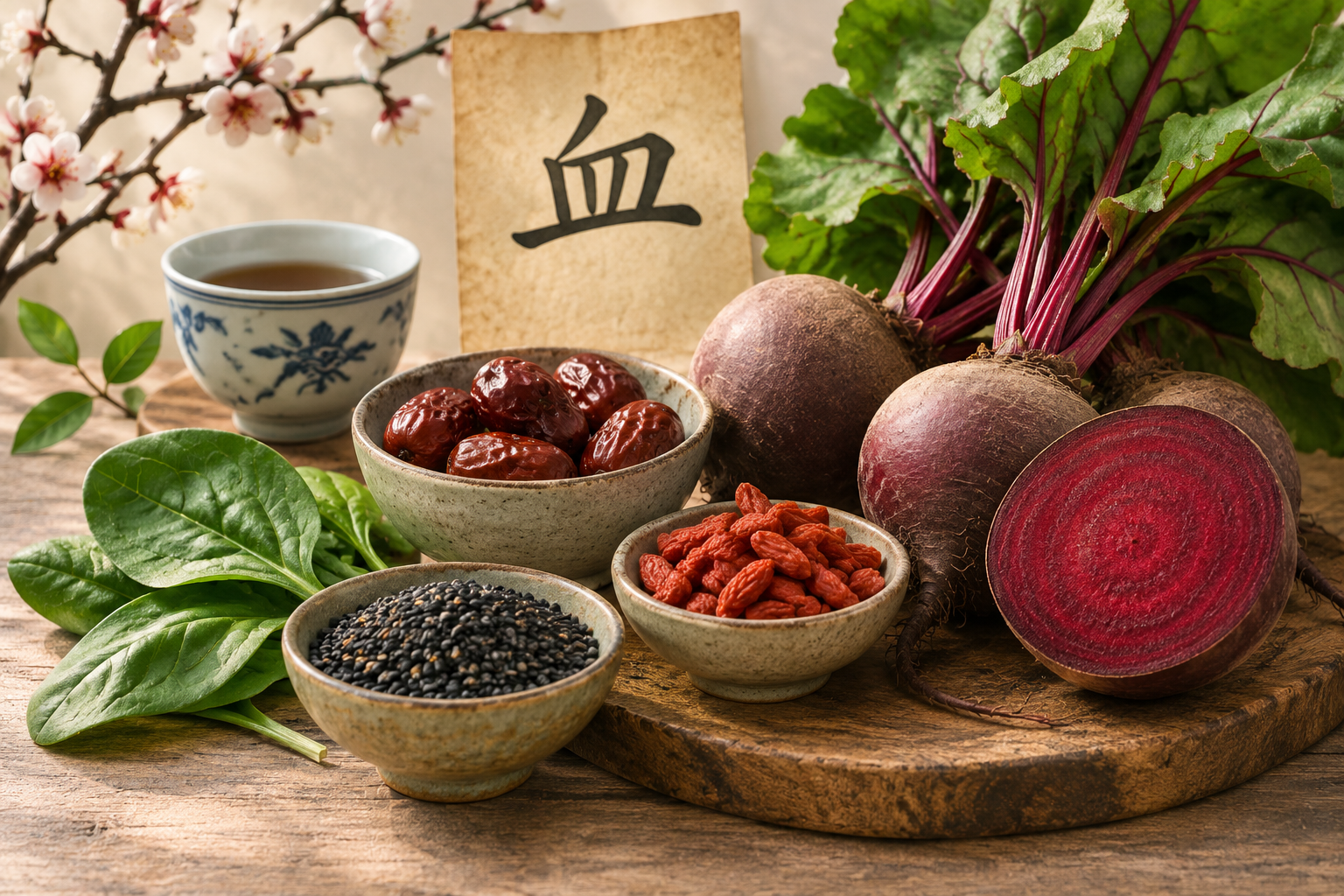
Nourishing Blood
Building • Nourishing • Restoring Vitality
What Is Blood Deficiency?
In Traditional Chinese Medicine (TCM), Blood nourishes the body's tissues, muscles, skin, eyes, and mind. Blood Deficiency describes a pattern of insufficient nourishment and is not necessarily the same as anemia.
Common TCM signs: Fatigue, pale complexion, dizziness, dry skin or hair, brittle nails, blurred vision, poor memory, restless sleep, light menstrual periods, and a pale tongue.
🌿 Foods That Nourish Blood
Traditional Chinese dietary therapy emphasizes nutrient-dense foods that nourish Blood, support digestion, and help the body maintain adequate nourishment.
Some foods directly nourish Blood according to TCM, while others support Qi, digestion, or nutrients needed for healthy red blood cell production.
Animal Proteins & Seafood
Beef — Traditionally nourishes Blood and strengthens Qi
Beef liver — Rich in iron and vitamin B12
Chicken — Supports Qi and Blood nourishment
Chicken liver — Rich in iron, vitamin A, and B12
Eggs, including yolks
Duck eggs
Lamb — Warming; particularly suitable for some Cold patterns
Pork
Sardines
Salmon
Oysters
Clams
Mussels
Dark-meat turkey
Dark Leafy Greens & Vegetables
Spinach
Swiss chard
Beet greens
Collard greens
Kale
Bok choy
Mustard greens
Broccoli
Asparagus
Beets
Carrots
Sweet potatoes
Winter squash
Pumpkin
Chinese yam (Shan Yao)
Lotus root
Shiitake mushrooms
Wood ear mushrooms
Fruits & Berries
Red dates (Jujube / Da Zao) — Traditionally nourish Blood and support Spleen Qi
Longan fruit (Long Yan Rou) — Traditionally nourishes Blood and calms Shen
Mulberries (Sang Shen) — Nourish Blood and Yin
Goji berries (Gou Qi Zi) — Nourish Liver and Kidney Yin and Blood
Blackberries
Blueberries
Raspberries
Cherries
Grapes
Raisins
Prunes
Plums
Figs
Apricots
Pomegranate
Apples
Pears
Oranges
Kiwi
Beans, Legumes & Soy Foods
Black beans
Black soybeans
Adzuki beans
Kidney beans
Lentils
Chickpeas
White beans
Soybeans
Tofu
Tempeh
Edamame
Mung beans
Split peas
Whole Grains & Nourishing Starches
Oats
Brown rice
White rice
Black rice
Quinoa
Millet
Barley
Buckwheat
Amaranth
Whole wheat
Sweet potatoes
Taro
Potatoes
Nuts & Seeds
Black sesame seeds — Traditionally nourish Liver and Kidney Blood
White sesame seeds
Pumpkin seeds
Sunflower seeds
Hemp seeds
Almonds
Walnuts
Cashews
Pistachios
Pine nuts
Flaxseeds
Chia seeds
Traditional Blood-Nourishing Foods & Preparations
Red date and goji berry soup
Longan and red date tea
Black sesame paste
Chicken and Chinese yam soup
Beef and root vegetable stew
Rice congee with red dates
Mulberry and goji berry porridge
Lentil and spinach soup
Bone broth as a nourishing soup base (not a major iron source)
Foods & Habits to Limit
Particularly when Blood Deficiency is accompanied by poor digestion, fatigue, or Spleen Qi Deficiency.
Foods That May Weaken Digestion in TCM
Excessive iced beverages
Large amounts of raw or cold foods when digestion is weak
Excessive greasy or fried foods
Highly processed foods replacing balanced meals
Excessive sweets and refined sugar
Foods & Beverages to Moderate
Excessive alcohol
Excessive coffee and energy drinks
Large amounts of strong tea with iron-rich meals
Highly restrictive diets without adequate protein, iron, or B vitamins
Eating Habits to Avoid
Frequently skipping meals
Excessive fasting
Chronically undereating
Relying on snacks instead of balanced meals
Eating an extremely limited variety of foods
Simple Blood-Nourishing Meal Ideas
Breakfast
Warm oatmeal with red dates, goji berries, and black sesame
Scrambled eggs with sautéed spinach
Rice congee with red dates and walnuts
Greek yogurt with berries and pumpkin seeds
Lunch
Beef and vegetable soup
Lentil and spinach stew
Black bean and quinoa bowl with roasted beets
Chicken and sweet potato soup
Tofu and bok choy over rice
Dinner
Beef stew with carrots and root vegetables
Baked salmon with sautéed greens and quinoa
Chicken and Chinese yam soup
Stir-fried tofu with broccoli and black sesame
Sardines with roasted vegetables and rice
Snacks
Dried apricots with pumpkin seeds
Fresh berries and walnuts
Red dates with a small handful of nuts
Hummus with vegetables
Hard-boiled eggs
Black sesame pudding
Everyday Tips for Nourishing Blood
Eat regular, balanced meals with adequate protein.
Include iron-rich foods such as meat, seafood, beans, and leafy greens.
Pair plant-based iron sources with vitamin C-rich foods to improve absorption.
Include sources of vitamin B12 and folate.
Choose warm, cooked meals when digestion is weak.
Prioritize adequate sleep and restorative rest.
Address heavy menstrual bleeding or other possible causes of blood loss with a healthcare professional.
Desert Shen Acupuncture — Food as Medicine
These recommendations reflect traditional Chinese dietary principles and modern nutritional considerations. TCM Blood Deficiency is not equivalent to anemia or another medical diagnosis. Persistent fatigue, dizziness, pallor, or suspected anemia should be medically evaluated. Organ meats are especially high in preformed vitamin A and may be inappropriate during pregnancy or with certain medical conditions. Dietary needs vary with kidney disease, diabetes, medications, and other health concerns.