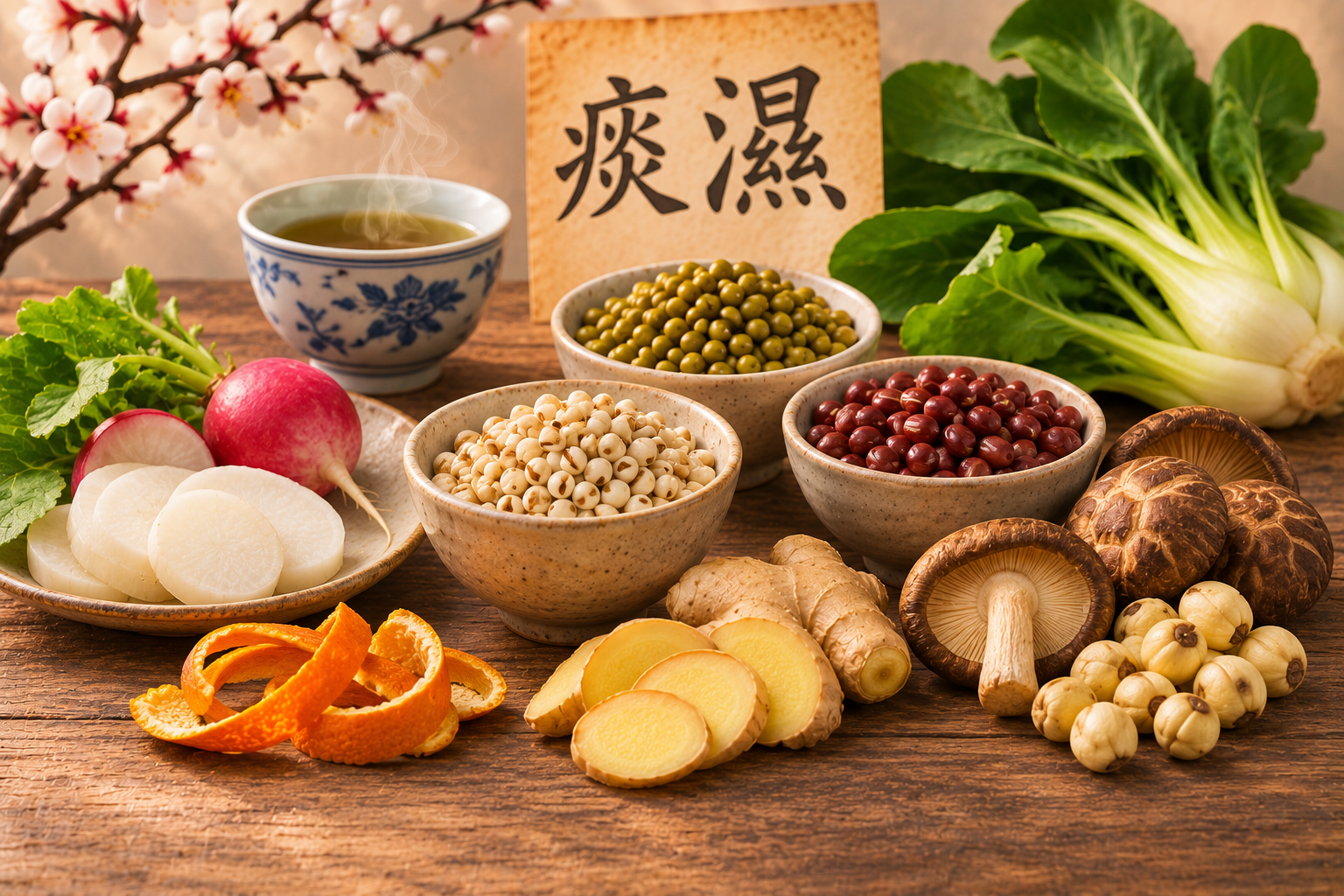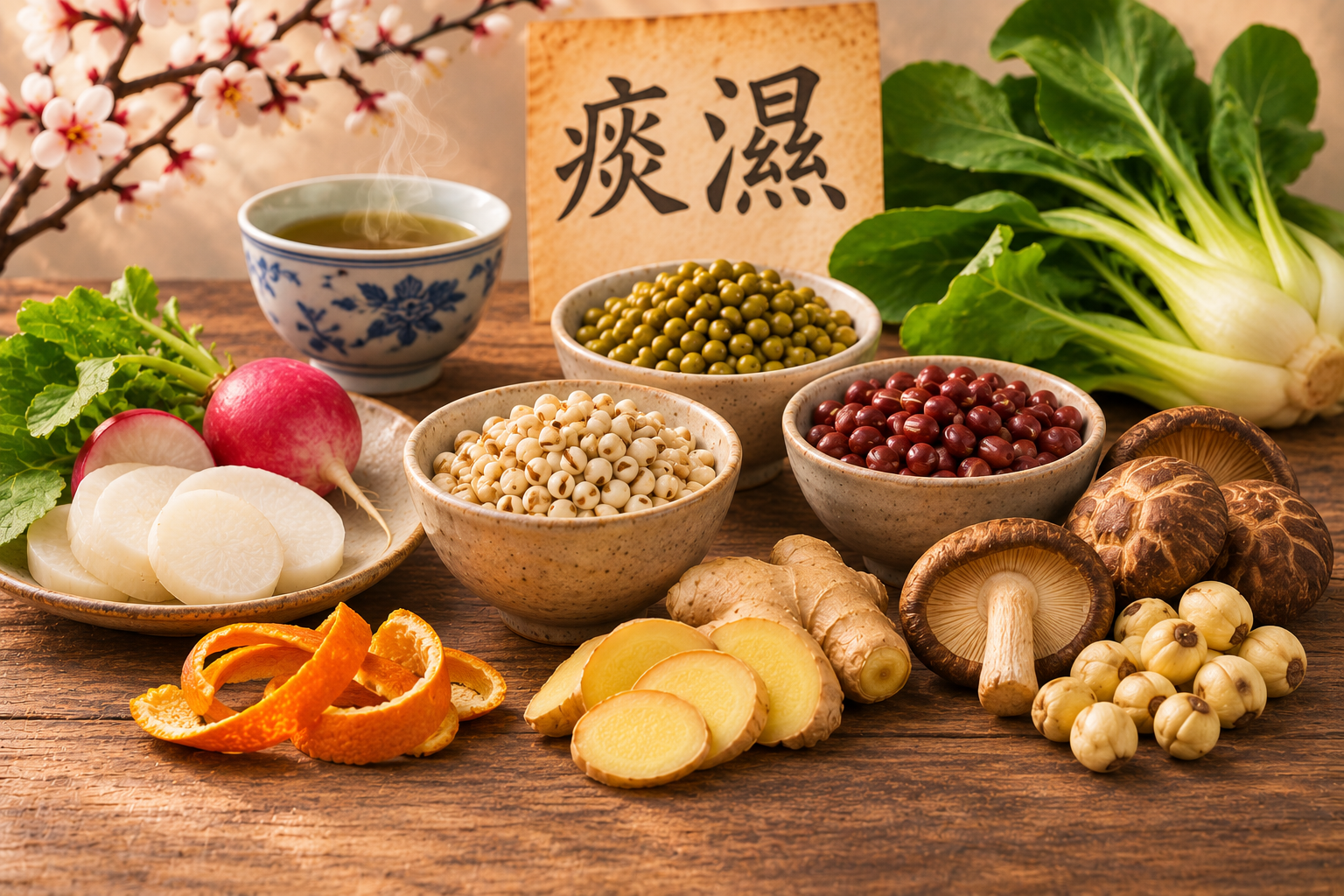
Resolving Dampness & Phlegm
Supporting Digestion • Transforming Dampness • Restoring Balance
What Are Dampness & Phlegm?
In Traditional Chinese Medicine (TCM), Dampness refers to an accumulation or impaired transformation of fluids that can contribute to sensations of heaviness, sluggishness, and digestive discomfort.
Phlegm is considered a more concentrated form of fluid accumulation. In TCM, it may involve visible mucus or other patterns of obstruction.
Common TCM signs: Bloating, heaviness in the body, fatigue, sluggish digestion, loose or sticky stools, excess mucus, a feeling of fullness, and a thick or greasy tongue coating.
🌿 Foods That Help Resolve Dampness & Phlegm
Traditional Chinese dietary therapy emphasizes foods that support Spleen function, promote healthy fluid transformation, and address Dampness or Phlegm according to the individual's pattern.
Grains & Nourishing Starches
Job's tears (Yi Yi Ren / Coix seeds) — Traditionally used to drain Dampness and strengthen the Spleen
Barley — Traditionally supports fluid metabolism
Millet — Supports digestion and Spleen nourishment
Brown rice
White rice
Buckwheat
Quinoa
Oats, in moderate portions
Amaranth
Corn
Polenta
Rice congee
Chinese yam (Shan Yao)
Beans & Legumes
Adzuki beans (Chi Xiao Dou) — Traditionally used to promote urination and drain Dampness
Mung beans — Traditionally clear Heat and support fluid balance
Lentils
Red lentils
Chickpeas
Black beans
Kidney beans
White beans
Split peas
Green peas
Soybeans
Tofu, preferably cooked and in moderate portions
Tempeh
Vegetables
Daikon radish — Traditionally helps transform Phlegm and support digestion
White radish
Turnips
Celery
Asparagus
Bok choy
Napa cabbage
Cabbage
Broccoli
Cauliflower
Green beans
Zucchini
Pumpkin
Winter squash
Carrots
Leeks
Onions
Scallions
Garlic
Fennel
Mushrooms
Shiitake mushrooms
Bamboo shoots
Water chestnuts
Bitter melon (especially for Damp-Heat patterns)
Winter melon (especially for Damp-Heat patterns)
Cucumber (cooling; more suitable for Heat patterns)
Root Vegetables & Tubers
Chinese yam (Shan Yao) — Strengthens Spleen Qi
Daikon radish — Helps move Qi and transform Phlegm
Turnips
Carrots
Parsnips
Sweet potatoes, in moderate portions
Pumpkin
Lotus root
Taro root, in moderate portions
Ginger root
Fruits
Moderate portions are generally preferred, particularly when digestion is sluggish.
Apples
Pears, especially cooked
Papaya
Grapefruit
Lemon
Lime
Oranges
Tangerines
Mandarin oranges
Pineapple
Berries
Cherries
Plums
Peaches
Apricots
Pomegranate
Animal Proteins & Seafood
White fish
Cod
Sole
Sea bass
Chicken
Turkey
Lean beef
Eggs
Shrimp (warming; more appropriate for Cold-Damp patterns)
Salmon, in moderate portions
Sardines
Lean pork, in moderate portions
Mushrooms, Sea Vegetables & Traditional Ingredients
Shiitake mushrooms
Button mushrooms
Oyster mushrooms
Wood ear mushrooms
Kelp — Traditionally used to soften and transform certain Phlegm patterns
Kombu
Wakame
Nori
Dried tangerine peel (Chen Pi) — Traditionally moves Qi and transforms Dampness and Phlegm
Lotus seeds (Lian Zi) — Support Spleen function
Coix seeds (Yi Yi Ren)
Adzuki beans
Herbs, Spices & Aromatics
Especially useful in appropriate Cold-Damp patterns. Strongly warming spices may be unsuitable for Damp-Heat.
Fresh ginger
Dried ginger, in small amounts
Cardamom
Fennel seed
Cinnamon
Turmeric
Cumin
Coriander
Black pepper
White pepper
Garlic
Scallions
Leeks
Parsley
Dill
Rosemary
Thyme
Basil
Dried tangerine peel (Chen Pi)
Teas, Soups & Traditional Preparations
Job's tears and adzuki bean soup
Daikon radish and ginger soup
Millet and vegetable congee
Chicken and Chinese yam soup
Barley and vegetable soup
Warm ginger tea (for Cold-Damp patterns)
Dried tangerine peel infusion (Chen Pi)
Light vegetable broth
Mung bean soup (for Damp-Heat patterns)
Warm water
Unsweetened green tea, if tolerated
Foods & Habits to Limit
In TCM, excessive greasy, sugary, cold, or difficult-to-digest foods may contribute to Dampness, particularly when Spleen Qi is weak.
Sugary Foods & Refined Carbohydrates
Candy
Pastries and doughnuts
Sugary breakfast cereals
Sweetened beverages
Excessive desserts
Refined snack foods
Frequent large portions of sweets
Greasy, Heavy & Fried Foods
Deep-fried foods
Greasy fast food
Heavy cream sauces
Excessively rich meals
Large amounts of processed meats
Frequent high-fat, heavily processed meals
Dairy & Dampness
Some TCM dietary traditions recommend limiting rich dairy foods when Dampness or Phlegm is prominent.
Ice cream
Heavy cream
Rich cheese sauces
Excessive cheese
Sweetened dairy desserts
Dairy does not universally increase mucus production. Individual tolerance and overall dietary needs should guide choices.
Cold & Raw Foods
Particularly relevant to Cold-Dampness with weak digestion.
Excessive iced beverages
Frequent frozen smoothies
Large amounts of raw salads
Excessive chilled foods
Ice cream and frozen desserts
Eating Habits to Avoid
Overeating
Frequently eating very large meals
Excessive alcohol
Skipping meals followed by overeating
Eating late at night when it worsens digestion
Relying heavily on processed foods
Excessive fasting or restrictive dieting
Simple Dampness-Resolving Meal Ideas
Breakfast
Warm millet porridge with cinnamon and cooked apple
Rice congee with ginger and scallions
Savory oats with mushrooms and cooked greens
Scrambled eggs with sautéed vegetables
Job's tears porridge with a small amount of fruit
Lunch
Daikon radish and chicken soup
Adzuki bean and vegetable stew
Barley soup with mushrooms and greens
Warm rice bowl with steamed fish and bok choy
Lentil and vegetable soup
Dinner
Steamed white fish with ginger and cooked vegetables
Chicken and Chinese yam soup
Stir-fried vegetables with tofu and rice
Lean turkey with roasted squash and green beans
Daikon, mushroom, and vegetable stew
Snacks
Fresh apple or pear
Small portion of berries
Roasted chickpeas
Steamed edamame
Lightly roasted pumpkin seeds
Warm ginger tea, if appropriate
Unsweetened green tea, if tolerated
Everyday Tips for Resolving Dampness & Phlegm
Favor regular, balanced meals.
Choose cooked vegetables and easily digested foods when digestion is weak.
Limit excessive refined sugar and heavily fried foods.
Stay physically active with regular, comfortable movement.
Avoid overeating.
Stay adequately hydrated rather than restricting fluids without medical guidance.
Prioritize sufficient sleep.
Adjust warming and cooling foods according to whether your TCM pattern involves Cold or Heat.
Address persistent mucus, swelling, or digestive symptoms with a healthcare professional.
Desert Shen Acupuncture — Food as Medicine
These recommendations reflect traditional Chinese dietary principles and are intended for general education. Dampness and Phlegm are TCM pattern concepts, not conventional diagnoses of fluid retention, respiratory disease, or other medical conditions. Persistent swelling, breathing difficulties, chronic cough, or unexplained digestive symptoms warrant medical evaluation. People with kidney or heart disease, prescribed fluid restrictions, pregnancy, or medications affecting fluid balance should seek individualized guidance before using diuretic foods or concentrated herbal preparations.